What karakuchi and nihonshudo actually mean
Karakuchi is the Japanese word for dry, and karakuchi sake is made to finish clean rather than sweet. The number that tells you how dry a bottle will taste is nihonshudo, sometimes printed on US labels as SMV, or sake meter value. It usually sits on the back label or in a brewery's spec sheet.
Nihonshudo compares the sake's density to plain water at a set temperature. More residual sugar makes the sake denser, which pushes the number negative and reads as sweet. Less sugar makes it lighter than water, which pushes the number positive and reads as dry.
As a rough scale, zero is close to neutral, plus five already counts as dry, and plus ten or higher is very dry. But acidity can change the impression completely: a bottle with higher acidity tastes far drier and sharper than its number suggests, while a low acid bottle at the same nihonshudo can feel soft and almost round. Alcohol plays a part too. So two bottles at the same nihonshudo can taste very different, and the number is best used as a starting point for comparing bottles before you buy, not as the final word.
Why Niigata built its reputation on dry sake
Niigata, on Japan's snowy west coast, is the prefecture most associated with dry sake, both in Japan and abroad. Its brewers work with soft water and rice grown in a cold, snowy climate, and the resulting style, often called tanrei karakuchi, or light and dry, became the prefecture's signature.
Kubota Hyakuju shows how that reputation was built: this tokubetsu honjozo from Asahi Shuzo Sake Brewing helped define Niigata's dry style back in the 1980s. Kubota Senju, Kubota Manju, Yukiotoko Junmaishu Yeti, and Tokubetsu Junmai Hakkaisan, all from Niigata, carry the same instinct for a light, dry finish across different categories and price points.
How dry sake behaves with food and temperature
Dry sake's low sugar, often paired with a bit more acid, makes it useful at the table: it cuts through fried food and fatty fish without stacking sweetness on top of the dish, and it does not fight with soy sauce, miso, or other salty, savory flavors. That is part of why dry styles remain a default choice at many Japanese restaurants.
Temperature changes how dry sake reads in the glass. Chilling sharpens the dryness and any acidity, which is why a ginjo like Kubota Senju is meant to be served slightly chilled or at room temperature, with a light, low aroma profile. Warming rounds the edges and brings out rice character, which is why Kubota Hyakuju is made for warming and Kuroobi Doudou Yamahai Junmai, a richer yamahai junmai, is also good warm. Otokoyama Tokubetsu Junmai is known for staying clean even when warmed.
Ranked from crisp to bone dry
The lineup below runs from the crisper end of dry to bone dry, ordered by nihonshudo where it is published. Prices are about what you would pay for a 720 ml bottle at US shops at the time of writing, and they change often. Ratings are OneSip user ratings at the time of writing, and they move as more people review.
 Tokubetsu Junmai Hakkaisan4.0 (3)HakkaisanNiigataNihonshudo 0$15
 Kubota Manju4.3 (6)Asahi-ShuzoNiigataNihonshudo +2$60
 Kubota Senju3.8 (1)Asahi-ShuzoNiigataNihonshudo +5$25
 Kubota HyakujuAsahi-ShuzoNiigataNihonshudo +5$23
 Hananomai Katana Cho Karakuchi3.8 (2)HANANOMAIShizuokaNihonshudo +5$25Joto DaiginjoFuji ShuzoYamagataNihonshudo +5$40
 Kuroobi Doudou Yamahai JunmaiFukumitsuyaIshikawaNihonshudo +5$40
 Suigei Junmai Ginjo Kouiku 54 GouSuigeiKochiNihonshudo +6$27
 Suigei Tokubetsu Junmaishu4.4 (9)SuigeiKochiNihonshudo +7$20Otokoyama Tokubetsu JunmaiOTOKOYAMAHokkaidonot published$25
 Sawanoi Junmai Okarakuchi4.2 (3)Ozawa ShuzoTokyoNihonshudo +10$28
 Yukiotoko Junmaishu YetiAoki ShuzoNiigataNihonshudo +12$25
 Rokkasen Junmai SuperDryRokkasenYamagataNihonshudo +15$30
Bottle by bottle, crisp to bone dry
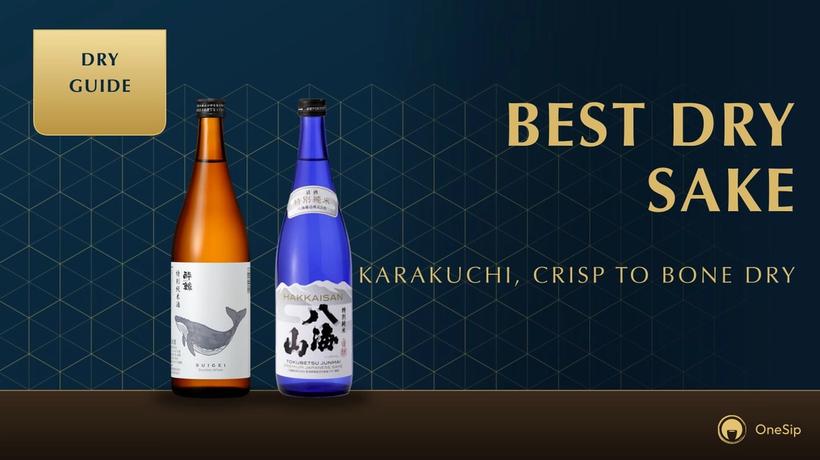
Tokubetsu Junmai Hakkaisan sits at the crisp end of this list, with a nihonshudo of zero from Hakkaisan Brewery in Niigata. Polished to 55% and rated 4 out of 5 from 3 ratings, the notes call it clean, dry, and consistent. At about $15 it is the least expensive bottle here, an easy way to taste the Niigata dry style.
Kubota Manju comes next, with a nihonshudo of plus two. It is the flagship of Asahi Shuzo Sake Brewing's Kubota range, polished to 50%, and rated 4.3 out of 5 from 6 ratings on OneSip. At about $60 it is the most expensive bottle on this list, and the notes describe it simply as refined and dry.
Kubota Senju moves the nihonshudo up to plus five. It is a ginjo built for the table: light, dry, and low in aroma, meant to be served slightly chilled or at room temperature. It shares a Niigata home with Kubota Manju, is rated 3.8 out of 5, and costs about $25.
Kubota Hyakuju also carries a nihonshudo of plus five. As a tokubetsu honjozo, it is the bottle that helped define Niigata's dry reputation in the 1980s, and it is made for warming rather than chilling. It runs about $23.
Hananomai Katana Cho Karakuchi is a junmai daiginjo at plus five nihonshudo, polished to 60%, from Hananomai in Shizuoka. It is sold under the Katana label in the US, rated 3.8 out of 5 from 2 ratings, and costs about $25.
Joto Daiginjo also sits at plus five. It is a daiginjo polished to 50%, brewed by Fuji Shuzo in Yamagata and imported under the Joto label. At about $40, it is one of the more widely carried bottles on this list, found in 27 US shops.
Kuroobi Doudou Yamahai Junmai rounds out the plus five group. It comes from Fukumitsuya in Kanazawa, Ishikawa, made in the yamahai style, which the notes describe as rich and savory and good served warm. It is priced at about $40.
Suigei Junmai Ginjo Kouiku 54 Gou steps up to plus six. It is a junmai ginjo from Suigei in Kochi, made with the prefecture's Gin no Yume rice, polished to 50%, and priced at about $27.
Suigei Tokubetsu Junmaishu jumps to plus seven, described as bone dry with high acid. It is the best rated tokubetsu junmai on OneSip, rated 4.4 out of 5 from 9 ratings, polished to 60%, and at about $20 it is one of the more affordable bottles here.
Otokoyama Tokubetsu Junmai has no published nihonshudo, but it is described as famously dry, and it stays clean even when warmed. It comes from Otokoyama in Asahikawa, Hokkaido, polished to 55%, and costs about $25.
Sawanoi Junmai Okarakuchi reaches plus ten, which the notes call extra dry. It comes from Ozawa Shuzo in Ome, Tokyo, polished to 65%, rated 4.2 out of 5 from 3 ratings, and priced at about $28.
Yukiotoko Junmaishu Yeti climbs to plus twelve and is labeled very dry. It comes from Aoki Shuzo in Niigata, polished to 60%, and costs about $25.
Rokkasen Junmai SuperDry closes out the list at plus fifteen, the highest nihonshudo here and the bone dry end of the range. It is a junmai from Rokkasen in Yamagata, polished to 70%, and it costs about $30.
How to choose based on how you will drink it
If you want a starting point for the style, pick something in the plus five range and serve it slightly chilled; that is where most of the bottles on this list sit, and it is the easiest way to taste karakuchi without going to an extreme. If you already know you like dry sake and want to push further, move toward the plus ten to plus fifteen bottles.
- New to dry sake: start around plus five, served chilled, such as Kubota Senju or Tokubetsu Junmai Hakkaisan.
- Cooking rich or fried food: reach for a higher acid bottle like Suigei Tokubetsu Junmaishu.
- Planning to warm your sake: choose one made for it, like Kubota Hyakuju, Kuroobi Doudou Yamahai Junmai, or Otokoyama Tokubetsu Junmai.
- Want the driest pour on this list: Rokkasen Junmai SuperDry at plus 15 nihonshudo.
Nihonshudo is not printed on every label. When it is missing, look for words like karakuchi, extra dry, or super dry on the bottle, which signal the same direction without a number.