
¿Qué es el sake artesanal?
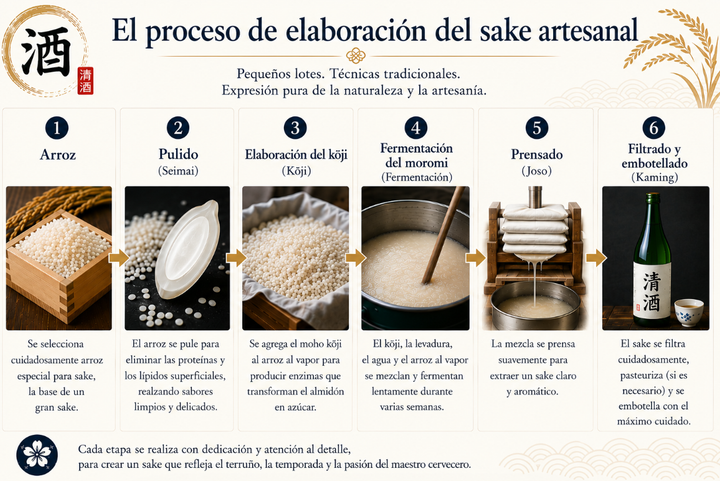
El término «sake artesanal» no cuenta con una definición legal oficial en Japón. Sin embargo, suele referirse al sake elaborado en pequeños lotes, con un fuerte enfoque en la calidad, la artesanía y la identidad propia de cada productor.
En lugar de priorizar el volumen de producción, las pequeñas bodegas buscan expresar las características del arroz, el agua, las levaduras y el entorno local. Muchas de ellas son empresas familiares que combinan técnicas tradicionales con una visión innovadora.
Las principales características del sake artesanal son:
- Producción en pequeños lotes
- Selección cuidadosa de los ingredientes
- Elaboración manual con un estricto control de calidad
- Ediciones limitadas y de temporada
- Sabores únicos que reflejan la personalidad de cada bodega
Incluso utilizando la misma variedad de arroz, el agua, las levaduras, el grado de pulido y la fermentación pueden dar lugar a perfiles aromáticos y sabores completamente distintos.
Por eso, cada botella de sake artesanal representa la historia, la filosofía y el carácter de la bodega que la produce.
¿Qué es el sake de producción industrial?
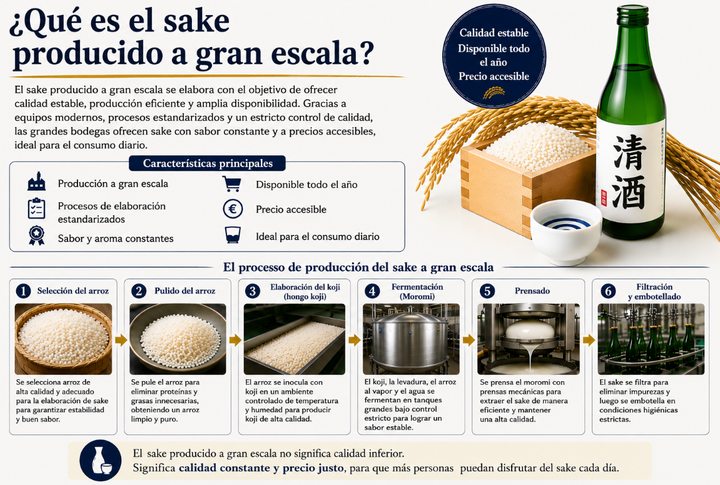
El sake de producción industrial se elabora con un enfoque en la consistencia, la eficiencia y la amplia disponibilidad. A diferencia del sake artesanal, que prioriza los pequeños lotes y la personalidad de cada bodega, este tipo de sake busca ofrecer un sabor uniforme durante todo el año.
Las grandes bodegas combinan la experiencia de sus toji (maestros elaboradores) con tecnología moderna y rigurosos controles de calidad. Gracias a la automatización y a la supervisión constante, cada botella mantiene un perfil de sabor estable.
Sus principales características son:
- Producción a gran escala
- Procesos de elaboración estandarizados
- Sabor y aroma constantes
- Disponible durante todo el año
- Precio accesible
- Perfecto para el consumo diario
Es importante entender que producción industrial no significa baja calidad. Algunas de las bodegas más prestigiosas de Japón producen grandes volúmenes sin renunciar a la excelencia. Incluso muchos Junmai Ginjo y Junmai Daiginjo de alta gama proceden de grandes productores.
Para quienes se inician en el mundo del sake, este tipo de elaboración representa una excelente forma de descubrir la diversidad del sake japonés.
Principales diferencias entre el sake artesanal y el sake de producción industrial
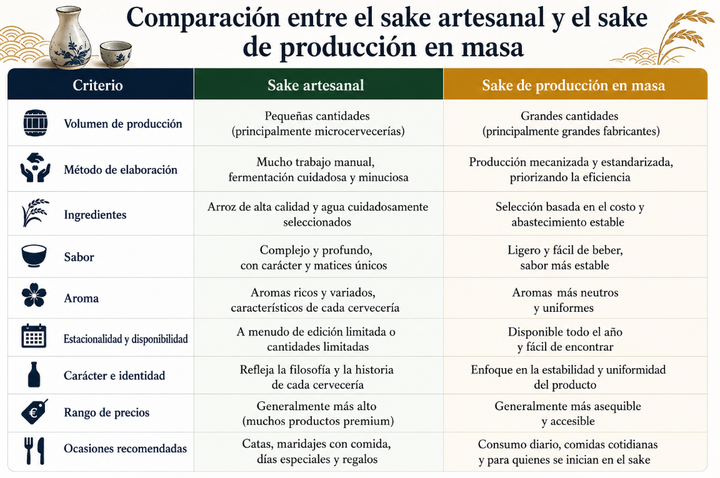
Tanto el sake artesanal como el sake de producción industrial se elaboran con los mismos ingredientes básicos: arroz, agua, kōji y levadura. Sin embargo, su filosofía de elaboración, los métodos de producción, el perfil de sabor y la experiencia de degustación son muy diferentes.
Ninguno de los dos estilos es objetivamente mejor que el otro. La mejor elección dependerá de tus gustos personales, de la ocasión y del tipo de comida con la que vayas a disfrutarlo.
1. Escala de producción
La diferencia más evidente es el volumen de producción.
El sake artesanal suele elaborarse en pequeños lotes, lo que permite a los productores supervisar cuidadosamente cada tanque de fermentación y realizar ajustes durante el proceso. Este enfoque favorece la creatividad y permite expresar el carácter único de cada bodega.
El sake de producción industrial se elabora en grandes volúmenes mediante procesos estandarizados y equipos modernos. La automatización mejora la eficiencia y garantiza una calidad uniforme en cada botella.
2. Perfil de sabor
El sake artesanal destaca por reflejar la personalidad de cada productor.
Dependiendo del arroz utilizado, el agua, la levadura y las técnicas de elaboración, puede presentar aromas florales o afrutados, una acidez vibrante, un intenso umami o características propias de una región o de una temporada.
Por su parte, el sake de producción industrial busca ofrecer un sabor constante. Cada vez que compras la misma etiqueta, puedes esperar prácticamente la misma calidad y el mismo perfil de sabor, lo que lo convierte en una excelente opción para el consumo diario.
3. Ingredientes y filosofía de elaboración
Muchas bodegas artesanales dan prioridad a la identidad regional.
Es habitual que utilicen arroz cultivado localmente, agua de manantial, métodos tradicionales o cepas especiales de levadura para crear sakes con una personalidad única y representativa de su lugar de origen.
Las grandes bodegas también emplean ingredientes de alta calidad, pero recurren a tecnología avanzada y estrictos controles de calidad para garantizar un sabor estable y fácilmente reconocible.
4. Disponibilidad
El sake artesanal suele producirse en cantidades limitadas.
Algunas botellas solo están disponibles durante determinadas estaciones o se venden exclusivamente en la propia bodega o en tiendas especializadas.
El sake de producción industrial puede encontrarse fácilmente durante todo el año en supermercados, tiendas de conveniencia, restaurantes, aeropuertos y comercios en línea, tanto en Japón como en muchos otros países.
5. Precio
El sake artesanal suele tener un precio más elevado debido a su producción limitada, al mayor trabajo manual y a su disponibilidad reducida.
El sake de producción industrial aprovecha las economías de escala para ofrecer un precio más accesible sin renunciar a una excelente calidad.
¿Cuál deberías elegir?
Si disfrutas descubriendo nuevos sabores y apreciando el trabajo artesanal de cada bodega, el sake artesanal es una excelente elección.
Si buscas un sake fiable, fácil de encontrar y perfecto para disfrutar a diario, el sake de producción industrial será una magnífica opción.
La mejor forma de comprender las diferencias es probar ambos estilos uno al lado del otro. Compararlos te permitirá descubrir la riqueza, la diversidad y la profundidad de la cultura del sake japonés.
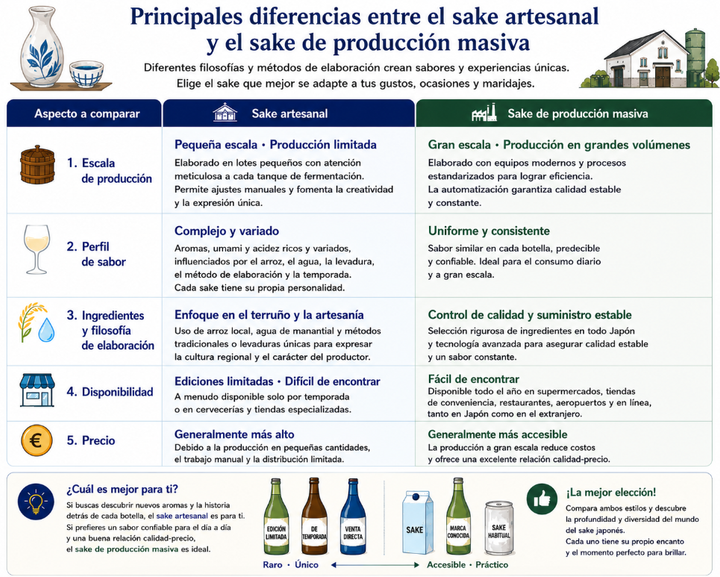
¿Cuál deberías elegir?
La respuesta depende de lo que estés buscando en una botella de sake.
Si disfrutas descubriendo sabores únicos, apoyando a pequeñas bodegas y explorando la tradición regional de elaboración, el sake artesanal es una excelente opción. Cada botella refleja la filosofía del productor, el agua, el arroz, el entorno y las técnicas de elaboración, lo que da lugar a un perfil único. Para muchos aficionados al sake, parte del encanto está en descubrir algo diferente con cada botella.
Por otro lado, si valoras una calidad constante, un precio accesible y una amplia disponibilidad, el sake producido a gran escala es una opción difícil de superar. Las grandes bodegas han perfeccionado sus procesos durante décadas y ofrecen un sake fiable, equilibrado y fácil de disfrutar tanto en las comidas diarias como en reuniones con amigos.
En realidad, estas dos categorías no compiten entre sí; se complementan.
Muchos amantes del sake disfrutan del sake artesanal en ocasiones especiales o durante catas, mientras que eligen sake de producción masiva para las cenas cotidianas, la cocina casera o encuentros informales.
Si estás empezando a descubrir el mundo del sake, no sientas que debes elegir solo uno. Prueba ambos estilos, compara sus aromas, sabores y personalidad, y descubre cuál se adapta mejor a tu gusto.
El mejor sake no se define por la forma en que se produce, sino por el que más disfrutas beber.
Conclusión
El sake artesanal y el sake producido a gran escala ofrecen experiencias diferentes, y ninguno es mejor que el otro por definición. Uno destaca por su personalidad, su carácter regional y el trabajo artesanal, mientras que el otro sobresale por su calidad constante, su accesibilidad y su excelente relación calidad-precio.
Ya sea que disfrutes de sushi de alta calidad, compartas una botella con amigos o simplemente quieras descubrir la cultura japonesa, comprender las diferencias entre estos dos estilos te ayudará a elegir el sake adecuado para cada ocasión.
La mejor manera de encontrar tu favorito es muy sencilla: prueba ambos. Cada botella tiene su propia historia, y cada sorbo es una oportunidad para apreciar aún más la riqueza de la cultura del sake japonés.
Encuentra el sake perfecto para ti. Explora la base de datos de OneSip: https://onesipsake.com/ Busca entre miles de sakes por estilo, región y perfil de sabor. Filtra por categorías y descubre el sake que mejor se adapta a tu paladar.