
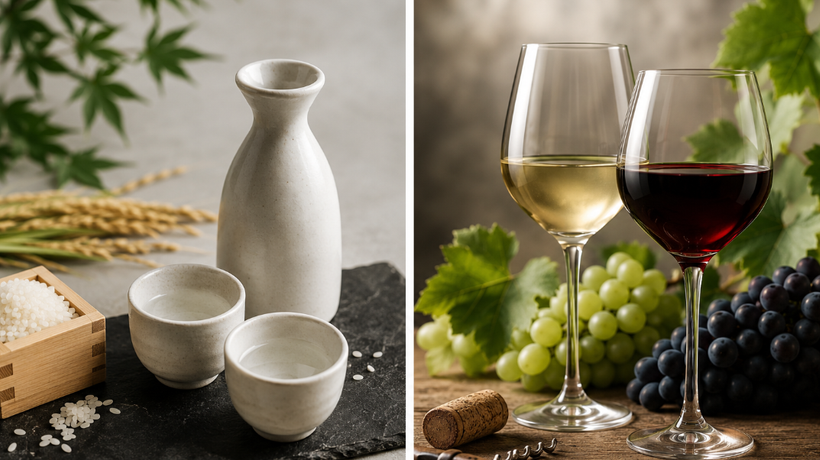
You've probably seen sake described as "Japanese rice wine" on menus and bottles around the world. It's a convenient label, but it's also a little misleading. Sake and wine are far more different than that phrase suggests. Understanding those differences is what transforms sake from an exotic menu item into a drink you genuinely know how to choose, order, and enjoy.
The Short Answer: Sake Is Not Wine
Let's clear this up from the start. Wine is made by fermenting the natural sugars found in grapes. Sake is made by fermenting rice. That single distinction creates two entirely different production processes, flavor profiles, and drinking cultures.
If sake resembles anything from the Western tradition, it's actually closer to beer. Both sake and beer start with a starchy grain rather than sugary fruit, requiring an extra step to convert starch into fermentable sugar before alcohol can be produced. But the similarities end there. Sake's finished product is nothing like beer in flavor or strength, sitting closer to wine at 14–16% ABV.
So sake occupies its own category. It's a brewed beverage with the alcohol level of wine, the grain-based production of beer, and the cultural significance of neither.
How They're Made: The Biggest Difference
The most fundamental distinction between sake and wine lies in how fermentation works.
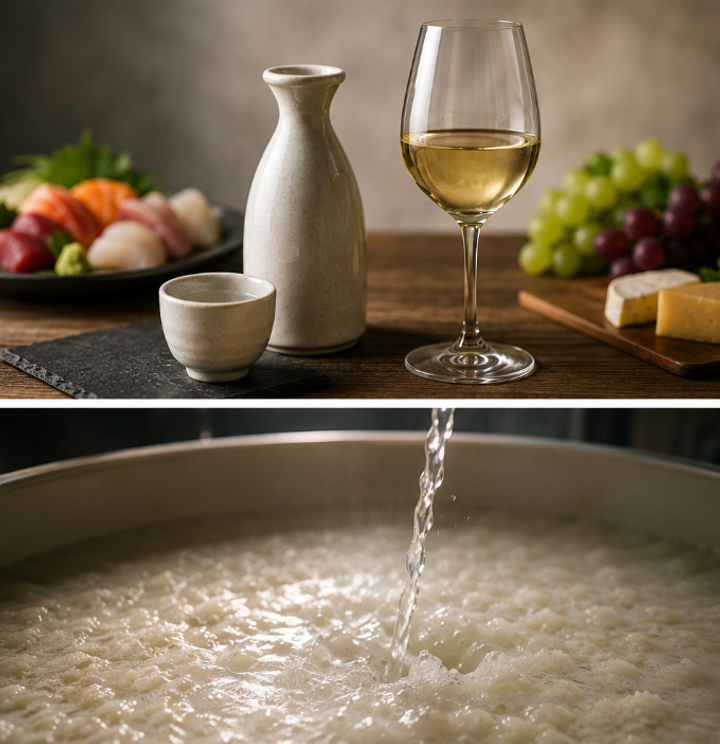
Wine: Grapes are crushed, and the natural sugars in the fruit ferment directly into alcohol with the help of yeast. The process is relatively straightforward.
Sake: Rice contains starch, not free sugar. Before any alcohol can be produced, that starch must first be converted into sugar. This happens through a mold called koji (Aspergillus oryzae), which is cultivated on steamed rice to break down starches into glucose. That glucose then ferments via yeast into alcohol.
What makes sake truly unique is that these two processes happen simultaneously in the same vessel. While koji is still converting starch into sugar, yeast is already fermenting the available sugar into alcohol. This is called "multiple parallel fermentation," and it exists nowhere else in the beverage world. It gives brewers a remarkable degree of control over flavor, body, and sweetness.
The sake brewing process is also significantly longer than winemaking. A bottle of wine can be produced in as little as two weeks. Premium sake takes two to three months of careful, temperature-controlled fermentation.
Ingredients: Simpler Than You'd Think
Wine needs only grapes and water. Sake requires four ingredients: rice, water, koji mold, and yeast. Some sake also includes a small amount of distilled brewer's alcohol, which is used not to increase potency but to adjust aroma and texture.
The rice used in sake brewing is not ordinary table rice. Special sake rice varieties like Yamadanishiki and Gohyakumangoku have a larger grain, a higher starch core, and lower protein content, all of which are ideal for fermentation. Before brewing begins, the rice is milled to remove the outer layers of bran. The degree of milling directly determines what type of sake will result.
Water quality is equally important. Different mineral profiles produce different results. Regions with soft water tend to produce delicate, elegant sake, while hard water yields bolder, more assertive styles.
Flavor: What's Actually Different in the Glass
Both sake and wine offer a wide range of flavors depending on their type and production method, but the underlying taste profiles diverge in meaningful ways.
Acidity: Wine is notably acidic. White wine typically contains 0.5–0.9g of acidity per 100ml. Sake has roughly one-fifth of that, sitting around 0.1–0.2g per 100ml. This makes sake feel softer on the palate and often gives it a gentler impression of sweetness, even when it is technically dry.
Sweetness vs. Savory: Wine leans sweeter because it is built on fruit sugars. Sake often tends toward savory, developing a quality called umami from the amino acids produced during fermentation. Sake contains five or more times the amino acid concentration of wine, which gives it depth and a satisfying richness that wine doesn't replicate.
Aftertaste: In Japan, a clean, quick finish is considered a quality marker in premium sake. Many wines, by contrast, are prized for their long finish. The two traditions value different things in that final impression.
Aroma: Both beverages can be highly aromatic, but the notes differ. Wine draws on the character of its grape variety. Premium ginjo and daiginjo sake produce a distinct fruity-floral fragrance called ginjo-ka, generated entirely by yeast during cold fermentation. Notes of melon, apple, banana, pear, and white flowers are common.
How They're Served
Wine is typically served in large glasses designed to concentrate aromas and allow the liquid to breathe. Sake is traditionally served in small ceramic cups called ochoko, poured from a flask called a tokkuri.
The temperature dimension is where sake diverges most dramatically from wine. While wine is generally either chilled (whites) or at room temperature (reds), sake can be served anywhere from 5°C to 55°C. Lighter, more aromatic premium sake is best served cold to preserve its delicate flavors. Fuller-bodied styles like junmai can be served warm to bring out umami and richness. This versatility has no real equivalent in the world of wine.
Calories and Alcohol
Sake and wine have similar alcohol content on average, with sake ranging from 14–16% ABV for most standard bottles. Sake tends to have slightly more residual sugar than dry wine, which means a marginally higher calorie count per serving. In practice, the difference is minimal, and the small serving sizes typical of sake often result in less total consumption per sitting compared to wine.
Are They Similar in Any Ways?
Despite their differences, sake and wine share more than just a reputation. Both are fermented beverages that pair beautifully with food. Both reward exploration of region, producer, and vintage. Both have developed sophisticated tasting cultures with trained experts and formal competitions. Both can express the character of their ingredients, water source, and local climate in ways that make geography meaningful to the drinker.
Some sake professionals draw parallels between the emergence of sake regionality and the terroir concept in wine. Different parts of Japan produce distinctly different sake styles, tied to local rice varieties, water profiles, and even ambient yeast strains. It's a framework that makes sense even if the word "terroir" doesn't translate directly.
Sake's lower acidity and umami depth make it one of the most versatile food pairings in the beverage world — often pairing well with dishes that wine struggles to complement.
Which Should You Try First?
If you enjoy dry white wine, start with a ginjo or junmai ginjo sake served chilled. The fruity aromatics and clean finish will feel familiar. If you prefer richer reds with savory notes, a junmai served at room temperature or gently warm will likely resonate. Nigori sake, with its creamy texture and gentle sweetness, makes an excellent entry point for anyone new to the category.
The best approach is to try sake with food rather than in isolation. Its lower acidity and umami depth make it one of the most versatile food pairings in the beverage world, working well with dishes that wine sometimes struggles to complement.
If you enjoy dry white wine, start with a Ginjo or Junmai Ginjo served chilled. If you prefer richer reds, try a Junmai at room temperature or gently warm.
Ready to find your first sake? Browse the OneSip database to explore thousands of sake entries by type, region, and flavor profile. Filter by category to find exactly the style that matches your palate.