
Target keywords: hanami sake, cherry blossom sake, sake cherry blossom season, hanamizake, best sake for spring Word count: ~2,200 Category: Culture CTA target: OneSip sake database, sake category pages
Every spring, Japan transforms. Cherry trees across the country burst into clouds of pale pink, and for a few fleeting days, the entire nation pauses to look up. This is hanami, the centuries-old tradition of gathering beneath cherry blossoms to eat, drink, and celebrate the arrival of spring.
At the center of every hanami gathering is sake. There is even a word for it: hanamizake, literally "flower-viewing sake." It is one of the most beautiful and distinctly Japanese ways to experience this drink.
Whether you are planning a trip to Japan during sakura season or simply want to bring a taste of hanami to your own spring gathering, this guide covers everything you need to know about pairing sake with cherry blossoms.
What Is Hanami?
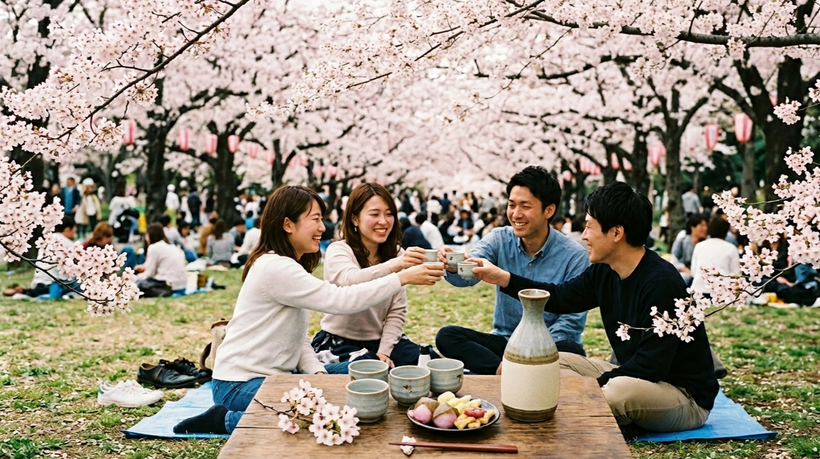
Hanami means "flower viewing," and in practice, it is Japan's most beloved outdoor celebration. Friends, families, and coworkers spread blue tarps or picnic mats beneath cherry trees in parks and along riverbanks, then spend hours enjoying food, conversation, and drinks while petals drift overhead.
The tradition dates back over a thousand years. During the Nara period (710 to 794), the aristocracy held flower-viewing parties under plum blossoms. By the Heian period, cherry blossoms had taken over as the preferred flower, and hanami became embedded in Japanese culture as a celebration of beauty, impermanence, and the arrival of warmer days.
Today, hanami is for everyone. Parks fill with office workers in suits sitting cross-legged on mats next to families with children and groups of university students. The atmosphere is relaxed, joyful, and surprisingly communal. Strangers share food. Neighbors wave. And sake flows freely.
When Is Cherry Blossom Season?
Cherry blossom season moves across Japan like a wave, starting in the subtropical south and rolling northward over roughly two months.
- Okinawa: Late January to mid-February
- Kyushu (Fukuoka, Kumamoto): Late March
- Kansai (Osaka, Kyoto, Nara): Late March to early April
- Kanto (Tokyo, Yokohama): Late March to early April
- Tohoku (Sendai, Akita): Mid to late April
- Hokkaido (Sapporo): Early to mid-May
The peak bloom, called mankai, typically lasts only about one week before petals begin to fall. This fleeting nature is part of what makes hanami so emotionally resonant in Japanese culture, it mirrors the Buddhist concept of mono no aware, the bittersweet awareness that beautiful things do not last.
What Is Hanamizake?
Hanamizake is the act of drinking sake while viewing cherry blossoms. It is not a specific type of sake but rather the experience itself. Any sake enjoyed under the blossoms becomes hanamizake.
That said, certain styles of sake are particularly well suited to the occasion. Hanami is an outdoor, casual, social affair, and the best hanamizake tends to be light, refreshing, and easy to share.
Best Sake Styles for Hanami
Junmai Ginjo
This is arguably the ideal hanami sake. Junmai Ginjo offers fruity, floral aromatics with a clean, medium-bodied palate that works beautifully at cool outdoor temperatures. It is refined enough to feel special but approachable enough that everyone in the group can enjoy it.
Look for sakes with melon, pear, or white flower notes. They echo the delicate beauty of the blossoms overhead.
Sparkling Sake
Sparkling sake has become a hanami favorite in recent years. The gentle effervescence, lower alcohol content, and festive feel make it perfect for outdoor celebrations. Many sparkling sakes come in smaller bottles that are easy to carry and share.
The light sweetness and refreshing fizz of sparkling sake also pairs beautifully with the traditional hanami snack lineup of rice balls, fried chicken, and sweet dango.
Nigori (Cloudy Sake)
The milky white appearance of nigori sake feels visually harmonious with cherry blossoms. Beyond aesthetics, nigori's creamy texture and gentle sweetness make it an excellent choice for people who are newer to sake or prefer softer flavors.
Nama (Unpasteurized) Sake
Spring is when many breweries release their nama, fresh, unpasteurized sake that has never been heated. These sakes have a lively, vibrant character with bright acidity and a youthful energy that matches the season perfectly.
Nama sake needs to stay cold, so bring a cooler bag if you plan to enjoy it at hanami.
Sakura-Themed and Spring Limited Editions
Every spring, Japanese breweries release limited-edition bottles with cherry blossom labels, pink-tinted sake, or even sake infused with actual sakura petals or leaves. These seasonal releases make wonderful souvenirs and gifts.
Some notable examples include bottles with gold flakes shaped like cherry blossoms, sakura-yeast sake brewed using yeast cultivated from cherry blossoms, and rose-tinted nigori sakes that capture the color of the season.
Hanami Etiquette: What Every Visitor Should Know
Hanami is casual, but there are unwritten rules that Japanese people observe. Following them will make your experience smoother and show respect to those around you.
Arrive early to claim your spot. Popular parks fill up fast, especially on weekends. Many groups send someone ahead in the morning to lay down a mat and reserve space. Do not take up more room than your group needs, space is at a premium.
Keep the volume reasonable. Hanami is social and lively, but avoid playing loud music or shouting. The atmosphere should be convivial, not chaotic.
Never touch the trees. Cherry trees have fragile branches and shallow roots. Do not climb them, shake branches to create petal showers, or pull down branches for photos. This damages the trees and is considered extremely disrespectful.
Pour sake for others. In Japanese drinking culture, you pour for the people around you, and they pour for you. It is considered poor form to fill your own cup. This reciprocal pouring is called oshaku and is one of the most charming aspects of drinking in Japan.
Clean up everything. Take all your trash with you when you leave. Many parks provide trash collection points during hanami season, but if not, carry everything out. Leaving a clean site is a point of pride.
Drink responsibly. While sake flows freely at hanami, getting visibly drunk and causing a scene is frowned upon. Pace yourself and enjoy the atmosphere.
What to Bring to a Hanami Party
If you are joining or hosting a hanami gathering, here is what experienced hanami-goers bring:
- Blue tarp or picnic mat, The standard ground cover
- Sake, One to two bottles per three to four people is a good guideline
- Cooler bag, Essential for keeping sake and beer cold
- Cups, Disposable cups work fine, but bringing ochoko (small sake cups) adds charm
- Food, Onigiri (rice balls), karaage (fried chicken), tamagoyaki (rolled egg), sandwiches, and of course hanami dango (tri-colored rice dumplings)
- Wet wipes and trash bags, For cleanup
- Warm layers, Early spring evenings get cold quickly, even when days are warm
Best Hanami Spots Across Japan
Tokyo
- Ueno Park, Over 1,000 cherry trees and the most iconic hanami location in the city
- Shinjuku Gyoen, Quieter, more spacious, with multiple cherry varieties extending the bloom period
- Meguro River, Stunning tunnel of blossoms along the riverbank with food stalls and lanterns
- Chidorigafuchi, Moat near the Imperial Palace, beautiful by boat
Kyoto
- Maruyama Park, The famous weeping cherry tree lit up at night
- Philosopher's Path, A canal-side walk lined with hundreds of cherry trees
- Fushimi, Combine hanami with visits to sake breweries in Kyoto's famous brewing district
Osaka
- Osaka Castle Park, Over 3,000 cherry trees with the castle as backdrop
- Kema Sakuranomiya Park, Along the Okawa River, popular for evening hanami
Off the Beaten Path
- Yoshino, Nara, 30,000 cherry trees covering an entire mountain, considered Japan's most spectacular sakura
- Hirosaki Castle, Aomori, 2,600 trees and a famous "cherry blossom carpet" of fallen petals on the moat
- Takato Castle Ruins, Nagano, Known for its rare pink Takato kohigan cherry blossoms
Yozakura: Nighttime Cherry Blossom Viewing
Hanami does not end when the sun goes down. Yozakura, or nighttime cherry blossom viewing, is equally popular. Many parks and temples hang lanterns among the trees, creating an ethereal, almost otherworldly atmosphere.
Warm sake is especially fitting for yozakura. As temperatures drop in the evening, a flask of gently warmed Junmai provides both comfort and flavor. The earthy richness of warmed sake feels right against the cool night air and softly lit petals.
Bringing Hanami Home
You do not need to be in Japan to enjoy hanamizake. The spirit of hanami is about pausing to notice beauty, gathering with people you care about, and marking the change of seasons with intention.
Pick up a bottle of Junmai Ginjo or sparkling sake. Find a park, a garden, or even a balcony with a view of any flowering tree. Lay out some food. Pour for your friends. Look up.
That is hanami.
Discover the perfect sake for your spring celebration on OneSip, browse ratings, reviews, and tasting notes for thousands of sakes from across Japan.